As someone who was raised as a Lutheran, I have previously had a fairly skewed presentation of Martin Luther. Luther was made out to be a hero, as would be expected for the religious sect that he spawned. However, that is not necessarily the case. While Luther was one of the main people responsible for the Reformation from Catholicism to Protestantism in Europe, he still had several flaws, much like many revolutionaries. Luther initially had great intentions for his role in the Reformation. The Catholic Church was running amok with power, and its grasp on Europe at the time was overwhelming. Luther saw that changes needed to be made, and that the best way to make the change would be to make a splash with something memorable. This is what the Nailing of the 95 Theses represented. Much like the Boston Tea Party during the American Revolution drew attention to the unfairness of the Tea Tax, Luther's actions served to draw attention to the problems with the Church. When the Church predictably lashed out back at Luther for this, he did not back down from their punishments, which also was very admirable, and probably the main reason his story is so famous historically. However, this quality is only admirable to a certain point. When Luther went into seclusion, he continued to push for change in an extremist way. This was a great approach to take to initiate change, but the radical viewpoints he continued to maintain after the Nailing decreased his credibility in many circles. When peasants started using his message as a cause for political overthrow, Luther should not have been supportive of this, as this was not his main objective. Instead, he was fully behind the chaos he had spawned, acting much like the person who starts a fight with frisbees by hitting someone with one accidentally. I do not believe he initially intended to cause as much chaos as he did, but when he realized that's what was happening, he was fully on board with it, simply because it caused disorder and angered the Church. This attitude lead someone who is sometimes regarded in the same breath as Ghandi and Martin Luther King Jr. to also be regarded along with the likes of Vladimir Lenin and the Joker from Batman lore. Martin Luther was a very polarizing character in German history, and while he is one of the Fathers of the Reformation, he could have done it in a far more sane manner.
Sunday, September 9, 2012
Thursday, September 6, 2012
History
The contrasts between German history and American history make for an interesting parallel. Neither country is over 300 years old, and both combine the ideals and culture of different groups of people that inhabited the countries prior to their formation. While the U.S. were formed on a combination of ties to the British Empire, influences from France and Spain, and a large amount of European immigrants that migrated over throughout the country's formative years, Germany saw a similar combination of influences from the Roman Empire, and ancient Germanic tribes such as the Franks and Saxons. Both countries also struggled with identity crises throughout their history. The United States wanted to prove itself in a highly imperialistic world during the 1800s, and at the same time wanted to shed its ties with Great Britain. Germany's struggle, however, was more internal, as the nation juggled attempting to meld the ideals and prides of several distinct nations into a working singular unit, all while trying to keep from being swallowed up in a heavily nationalistic Renaissance Europe. The United States wanted to establish an identity globally, while the Germans wanted to simply establish a national identity. The Americans wanted others to know what being American meant. The Germans wanted their own people to understand what being German meant. This was a difficult question to answer, as the area had undergone several ruling changes, particularly from the 1300s to the early 1900s. The Holy Roman Empire, German Confederation, Weimar Republic, and Nazi Regime all held power for a period over this span, and for much of this 600-year period, Germany was operated as a collage of principalities and small states that were governed independently of each other. So, when the country was unified as one entity, they of course struggled to mesh into a working national identity, much as the American colonies did during the American Revolution. It's fairly amazing to see how far this country, which is now known as one of the top economic powers in the world as well as a reputation as a savvy nation that excels in making two things Americans like (Beer and cars), has come from the days of the different states in the confederation fighting among themselves. This also makes this topic an interesting one to study, as the answers as to how this transition occurred in German history are complicated and sometimes unclear. This struggle for identity is a major problem throughout most of German history, and makes this a highly riveting area of study.
Word Count: 420
Word Count: 420
Tuesday, August 28, 2012
Reasons I'm Studying in Germany
1. My college career has helped me develop a love for Germany. Two of my roommates, who double as two of my closest friends at North Central, are German majors. I have spent the majority of the last three years hearing about the German program, and what a wondrous place Germany is. My father is also a fairly big World War II and German history buff, as his grandparents were German immigrants. Having heard so much about Germany and German culture throughout my life, I have developed a natural inclination for learning about Germany. Combined with this, four of my close friends, including the aforementioned roommates, went on the Berlin D-Term trip two years ago. Having heard the stories about that experience, it solidified my wish to go to Germany and experience it for myself. Having these friends to prepare me for the trip also makes it feel like I've already been there, and I feel less nervous about traveling abroad because I have been prepared well for what to expect.
2. I also have a huge love for all European culture, and have for a long time. I love learning about European history, and about the interactions between the diverse groups of people that live on the world's smallest continent. I have always wanted to go to Europe, but unfortunately have not left the U.S. up to this point. This being my last year of college, I feel that I will not really have the opportunity to travel for a long time. So, I felt that I had to seize the opportunity to go on a D-Term trip while I had the chance, and Germany seemed like the perfect fit. I have no real interest in going to Asia, Australia is too expensive, and London and Paris seem boring. Germany, however, is the perfect blend of great food, great people, and unique history. This trip seems like it will be fascinating every step of the way.
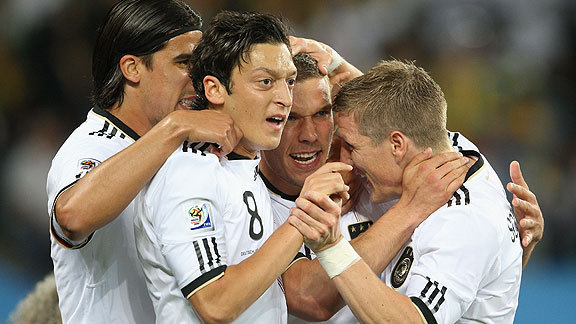
3. Finally, I'm enthralled by European football. I absolutely love it. I follow the English Premier League very closely, and also maintain a regular interest in the Bundesliga. I always hear about how big football is over there (Yes, I call it football, not soccer), and I'm interested in finding out if it really is that big of a deal over there.
![]() |
| One of my roommates, talking to a mannequin in Berlin on the 2010 trip. Clearly I'm being prepared by the best. |
2. I also have a huge love for all European culture, and have for a long time. I love learning about European history, and about the interactions between the diverse groups of people that live on the world's smallest continent. I have always wanted to go to Europe, but unfortunately have not left the U.S. up to this point. This being my last year of college, I feel that I will not really have the opportunity to travel for a long time. So, I felt that I had to seize the opportunity to go on a D-Term trip while I had the chance, and Germany seemed like the perfect fit. I have no real interest in going to Asia, Australia is too expensive, and London and Paris seem boring. Germany, however, is the perfect blend of great food, great people, and unique history. This trip seems like it will be fascinating every step of the way.
3. Finally, I'm enthralled by European football. I absolutely love it. I follow the English Premier League very closely, and also maintain a regular interest in the Bundesliga. I always hear about how big football is over there (Yes, I call it football, not soccer), and I'm interested in finding out if it really is that big of a deal over there.
![]() |
| My Favorite German team is Schalke 04. Here's German striker Lewis Holtby from Schalke. |
Monday, June 4, 2012
Subscribe to:
Posts (Atom)